
On Wednesday 26 November 2025, over 40 speakers and nearly 300 delegates came together at the Royal College of Physicians, London, for the IHE Annual Conference 2025.
With a spirit of collaboration and shared purpose, the conference offered the perfect setting for delegates to share insights and knowledge, engage in lively debate, network with peers, make meaningful connections, and learn more about the services provided by our 17 exhibiting organisations.
Our packed programme explored government priorities for tertiary education, the impact of the Post-16 Education and Skills White Paper and recent policy reforms, plus key factors shaping independent provision across regulation, governance, AI and technology - and plenty more.
The day also offered the opportunity to reflect on IHE’s achievements over the past year and look ahead to our shared priorities for 2026 and beyond.
Conference highlights
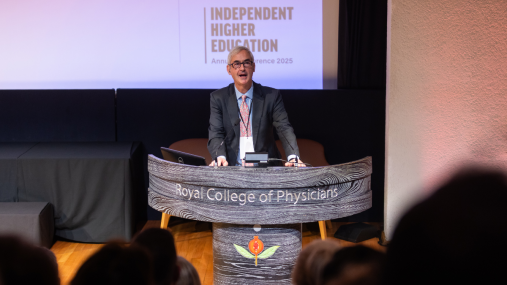
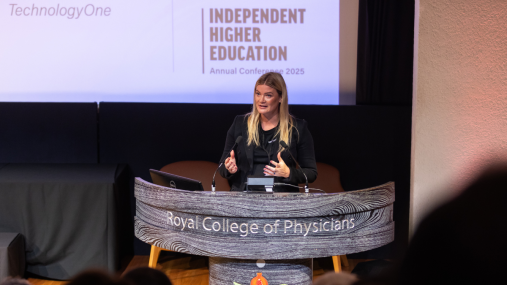
James Pitman, Chair of the IHE Board, and Cheryl Watson, Vice President of Education at TechnologyOne (Platinum sponsor), welcomed delegates to the conference and shared their reflections on the key challenges and opportunities facing the higher education sector.
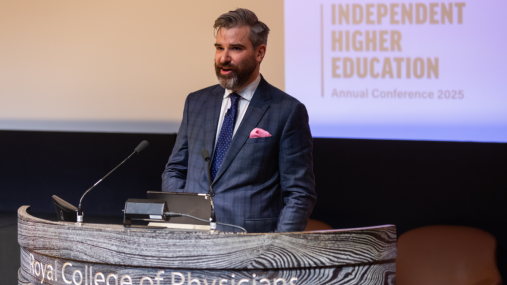
This was followed by an opening address from IHE Chief Executive, Alex Proudfoot, who offered an exclusive first look at the initial findings from the IHE Survey 2025, providing timely insights into the size and shape of IHE Members, their delivery models and industry partnerships, regional and international activity, and ambitions for growth.
With growing global demand for higher-level, industry-relevant learning, he described the Post-16 Education and Skills White Paper as a clear call to action for the sector, offering snapshot case studies of IHE Members who are already leading the way.
Alex also highlighted IHE’s achievements over the past year, including the continued growth of our staff team and member community, expanded student representation, enhanced policy and advocacy activity, and the delivery of sector-relevant events.
Morning plenaries
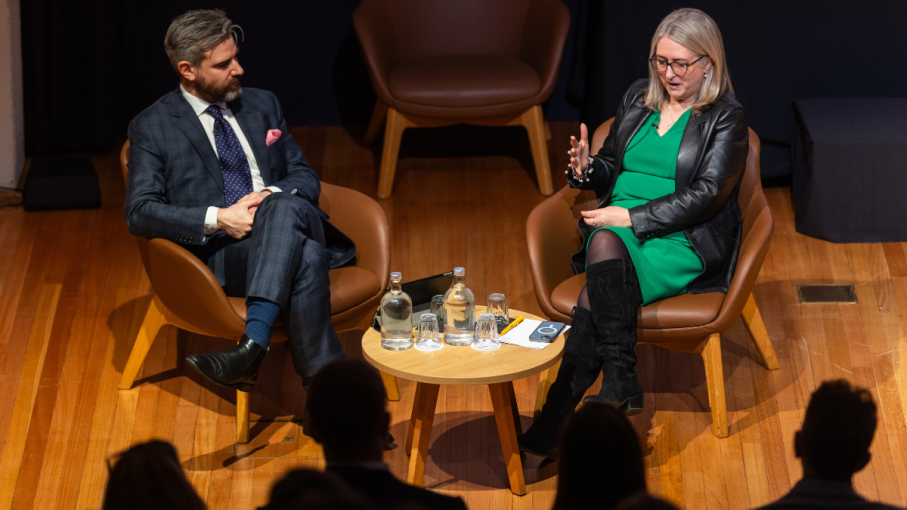
Our first plenary saw Alex in conversation with The Rt Hon Baroness Jacqui Smith, Minister for Skills. Reflecting on her return to government after 15 years, the Minister discussed the Post-16 Education and Skills White Paper, the Lifelong Learning Entitlement (LLE), and the oversight she now has across education and employment through her role spanning the Department for Education (DfE) and the Department for Work and Pensions (DWP).
The Minister recognised the value, diversity and innovation IHE Members bring to the wider sector, equipping learners with essential skills and contributing to the breadth and quality of provision for which UK higher education is renowned.
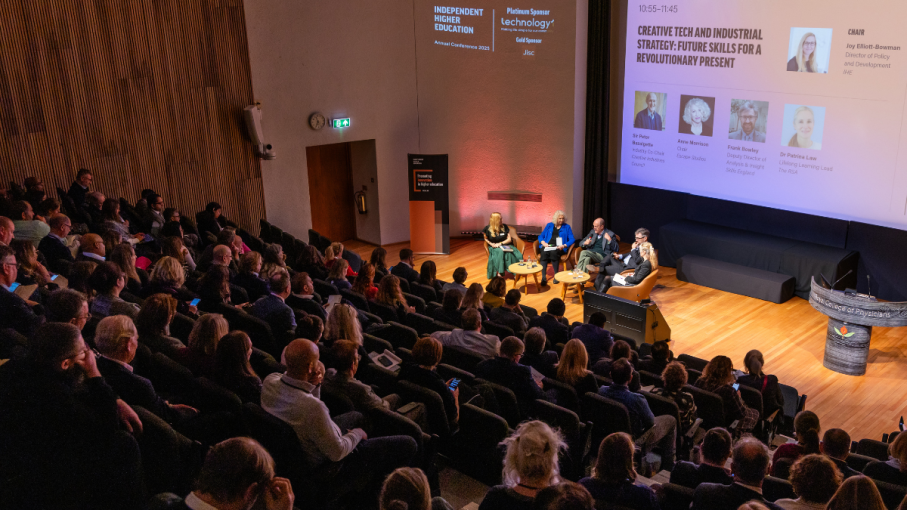
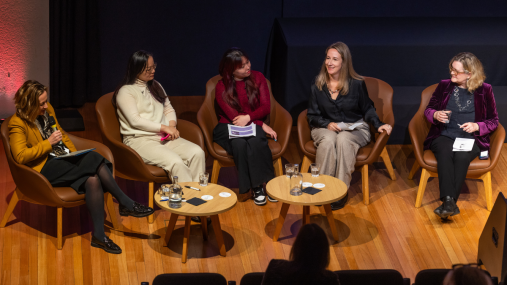
Our first panel session, Creative tech and industrial strategy: future skills for a revolutionary present, explored how the creative industries and technology are driving demand for cutting-edge skills, and the role independent providers can play in meeting these needs. Key discussion points included the importance of clearly defining and communicating routes into creative careers to students, engaging with the LLE and the opportunities it presents, digitally documenting skills, and learning from international approaches.
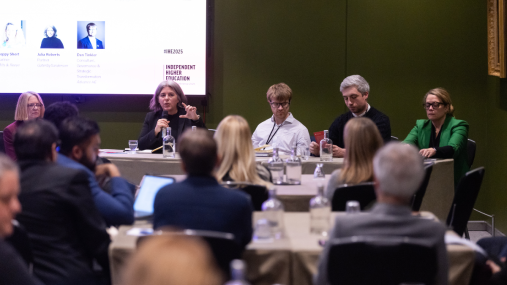
In Systems and sandboxes: regulating for innovation, collaboration and growth, we heard from Professor Ellen Hazelkorn, Joint Managing Partner of BH Associates, followed by a conversation between Alex Proudfoot and Professor Edward Peck, Chair of the Office for Students (OfS). The discussion examined how global economic, social and technological trends shape higher education policy alongside government priorities, and how regulators can support institutions and students to thrive. Delegates heard about the importance of collaboration between independent and public sector providers, increasing efforts to give greater recognition to mature learners, and how IHE Members need metrics that work for their particular contexts, as often raised in responses to OfS consultations.

Breakout sessions
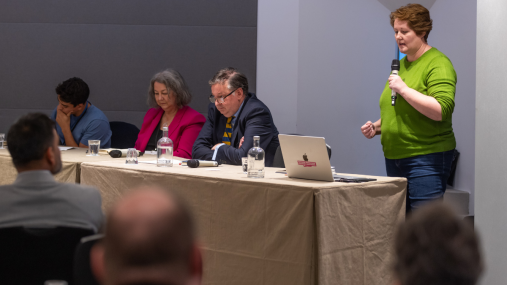
The first set of breakout sessions took place in the afternoon, with delegates choosing from four parallel options:
- LLE: the field of dreams?
This session highlighted the strong potential of LLE, provided that policy design is matched by practical implementation and provider readiness. Speakers noted opportunities for sector growth alongside concerns around competition, pressures on quality assurance underpinning credit transfer, and the need to adapt as the model evolves.
- Competition or collaboration?
Panellists explored whether institutions should compete to differentiate or collaborate to share resources amid financial pressures and potential sector contraction. Two key messages emerged: competition and collaboration can coexist, and students must remain at the heart of decision-making, with their voices actively shaping outcomes.
- Freedom of speech in 21st century higher education
This session examined how free speech can be made meaningful, practical and fit for purpose in a landscape shaped by student choice, employer partnerships, and digital learning. Speakers called for clearer, more nuanced guidance to support implementation of the Freedom of Speech Act, alongside practical provider actions such as promoting codes of practice, raising awareness of rights and standards, embedding free speech in teaching, and encouraging diverse viewpoints.
- Looking beyond recruitment: risks to student completion and success
Focusing on both challenges and solutions, the panel discussed building student connection and belonging early, improving access to financial support, and embedding inclusive teaching and assessment practices to support student success.

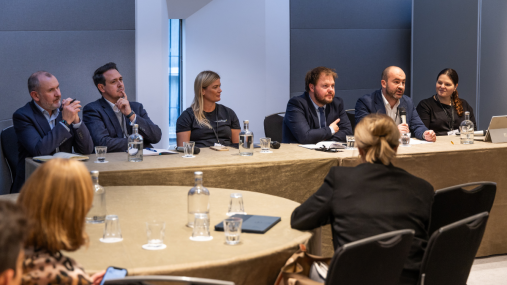
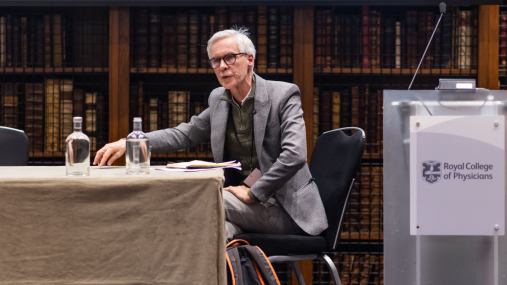

Our second round of breakout sessions covered:
- AI in higher education: who wins, who loses?
This session explored the opportunities and risks of AI use. Discussion emphasised collaboration with students, embedding AI skills within curricula, and ensuring accessible approaches to reduce outcome gaps, particularly for international students and those for whom English is a second language.
- Whose culture? Building governance that fits
Speakers examined what makes governance effective, highlighting the importance of induction and ongoing development, diversity, establishing clear expectations and a strong institutional culture. The session explored how smaller providers can build agile, fit-for-purpose governance aligned with their strategic goals rather than replicating structures of larger institutions.
- Immigration White Paper unpacked: what the new BCA means for higher education providers
This session considered the implications of the new Basic Compliance Assessment (BCA) for independent providers, including updated Student sponsor compliance requirements to be met annually. Speakers highlighted potential risks for smaller providers, particularly in accessing real-time data and managing the increased compliance burden.
- Academic partnerships: evolution or revolution?
Set against a backdrop of scrutiny and recent criticism that often overlooks their potential, discussion focused on how academic partnerships can continue to widen access. Speakers emphasised the need for innovation and adaptation to ensure resilience as new subcontracting and franchising rules take effect.



Afternoon plenary
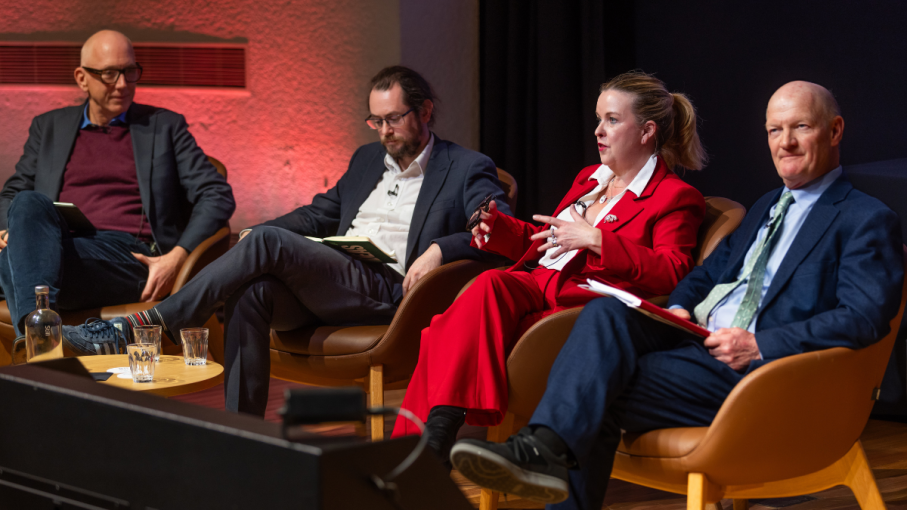
Our closing plenary session, Engines of the economy: UK regions open to the world, explored higher education’s role in driving regional economic growth and international engagement. Key themes arising from the discussion included the contribution of international students as economic and reputational assets, collaboration between providers, employers and communities, and maximising the opportunities arising from devolution and regional skills planning. The call to action for independent providers was to continue to innovate and play an active role in shaping local delivery plans, with sustainable recruitment and the Graduate route cited as being central to aligning education, skills and economic strategies for inclusive growth.
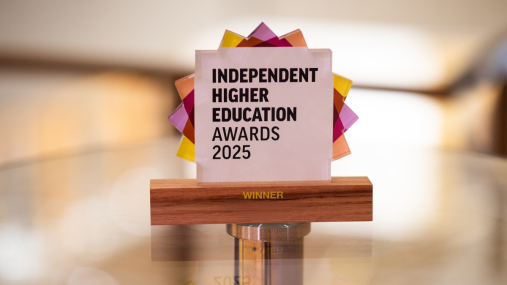
Following closing remarks, delegates retired to the Dorchester Library for a drinks reception and the IHE Awards 2025, where colleagues from across the sector joined us to celebrate the outstanding achievements of the IHE community.

IHE Annual Conference 2026: Save the date
We look forward to returning to the Royal College of Physicians on Wednesday 18 November 2026.
Thank you to our conference sponsors
Our sincere thanks to TechnologyOne (Platinum sponsor), and Jisc (Gold sponsor) for their invaluable support of the IHE Annual Conference 2025.


Image credits:
© 2025 Guy Traynor
www.guytraynorphoto.com